The company established by three anthropologists relied on strong research expertise

Kenno originated from Elina Reponen, Anna Martela and Viola Strandberg’s strong belief that the methods of applied research used by anthropologists and ethnographers could benefit internationalising companies. As part of their studies, they all had done field work abroad.
“At that time, it was common for people to work abroad as part of their studies. However, it was not usual for students in the field to do their master’s theses for a company. I made my thesis for Nokia in Singapore and Indonesia. In retrospect, as entrepreneurs, we at Kenno were bold to start off lacking any networks or experience. Throughout the years, Kenno succeeded in preserving the core of its operations and has continued to do so even after the company was sold. We are proud of what we achieved,” recalls Anna Martela, who served as CEO of the company.
Boost for company’s early stages from Aalto Protomo
“The idea was to establish a nice workplace for the three of us. We hit the right spot at the right time. We were able to combine different things with an open mind and just see what new it would bring about. When we founded the company, we did not have any ready-made formats or structures to follow, but as anthropologists this kind of a situation is familiar to us from field work,” Elina Reponen says.
Around the same time, Aalto Protomo offered a multidisciplinary innovation environment and a pre-incubator for those interested in entrepreneurship in the upper floor of the Small Business Centre’s premises on Arkadiankatu.
“When Kenno had been founded, we contacted Protomo and told them that we could come there. We were provided with facilities for our own use, and Kaisa Ahonen sparred us through discussions. We took an entrepreneurship course and learned things that had not been included in our own studies: we considered how to run a business in practice, learned reporting and accounting, and prepared a business plan.”
The founders of Kenno also used Protomo for meeting other entrepreneurs and for networking.
“Starting a business felt exciting. We wondered if we even dared to say it out loud. On the other hand, it gave us a sense of control. We received support when we asked for it. There was a lot of bureaucracy at the beginning, which seemed difficult,” they point out.
Coming from a research background gave practical tools.
The business idea – supporting Finnish companies that set out to grow and internationalise their operations – remained unchanged throughout the years.
“Internationalisation was different 12 years ago. We sold human understanding and were able to carry out extensive research on customer understanding. The use of familiar research methods gave us added value.”
In Kenno’s early years, methods of service design became more commonly used as part of how services were packaged for companies.
“As the use of service design increased and people were talking about it, it helped us as well. Until then, we had communicated about our services by means of quantitative methods, but now qualitative methods started to gain more ground.”
We found our first clients by going out to meet people. At the event organised by the University of Helsinki in Porthania, we found a connection to people working with the City of Helsinki’s development projects.
“At the time, the Hämeentie bicycle lane was being planned, and we were allowed to participate in the city’s development projects. By coincidence, we then established a connection with a Swedish food industry company seeking ethnographic competence for doing cultural research. They needed to learn to understand Finnish consumers. Over the years, we found more clients among large industrial companies that provided services for their own clients.”
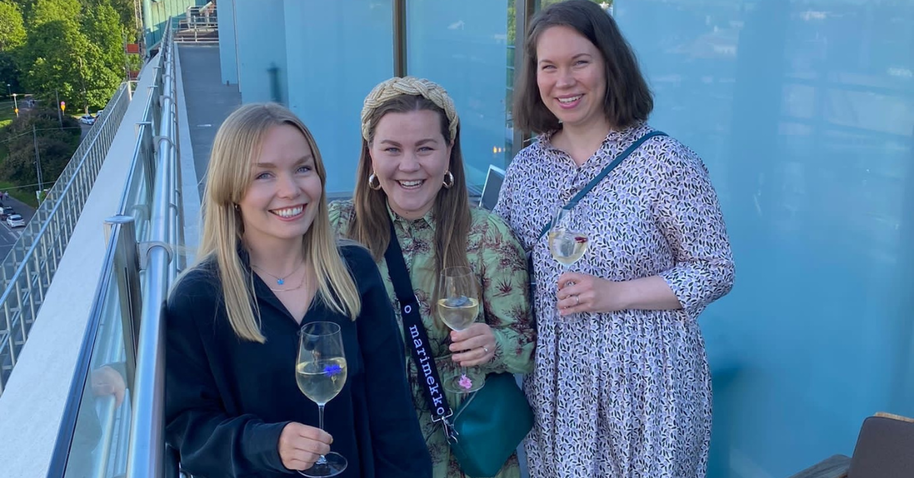
The trio began to enjoy entrepreneurship, and the entrepreneurial way of doing things became natural.
“We wanted to grow not only qualitatively but also quantitatively. We took a digital leap and succeeded in packaging our services. However, selling and marketing are not always easy. At first, we had to force ourselves to do sales work. Then it started to come more naturally. We built structures, i.e. we decided to dedicate a certain time of the day to calling potential clients following a specific list. We also visited various events.”
Kenno was perceived as a start-up company, even though the term did not feel exactly right for the company.
“A certain tech vibe is often associated with start-ups, and we did not recognise it in ourselves. However, we did recognise the desire of start-ups to grow and develop, which means that we were start-up entrepreneurs in spirit and wanted to create something new. One of our accomplishments is that we have influenced the way anthropologists today think about their careers and all the things the studies can enable for them.”
To expert work through the sale of the company
When the opportunity to sell the company presented itself for Kenno entrepreneurs, they took it. Kenno was sold to Miltton in 2022 but remained on the background as an investment company.
“Miltton contacted us and offered us the opportunity of selling the company to them. We didn't seize it right away. At the time, we were considering the next steps for the company and discussing the situation with people around us. What motivated us to accept the acquisition offer was ultimately the opportunity to become part of something even bigger. We had already changed the company’s name to an English one, Kenno Anthropology, as part of the brand reform in 2019. Giving up the company was not such a big deal after all. We have now reached the core of business anthropology. This is a good fit for us.”
At its largest, Kenno had five own employees and some hired freelancers. Now, Kenno employees are part of the Miltton research community, which has globally around 400 experts in total.
“In our work, we see that companies face pivotal points and crises as part of their growth. For such moments, different kinds of advisory services should be available at a low threshold. For Kenno, the sale of the company was a pivotal point. Thinking back, we believe that we would have benefited from impartial support when we made the decision.”
There is now much talk about student entrepreneurship, i.e. students establishing companies already during their studies. Martela and Reponen believe that Kenno was established at a suitable time.
“Today, students are certainly more familiar with entrepreneurship than we were. However, if you feel reluctant, it may not be a good idea to start an enterprise. For us, entrepreneurship was not a huge leap, and it did not feel like a risk. All we needed to invest was our own time. We did not need to give up anything, we had no dependants, and we did not need to lower our standard of living. Nowadays, entrepreneurs have to consider all kinds of things, including the impacts of artificial intelligence. It would still be important to have access to low-threshold support and advice. In addition, you should also always be ready to welcome support.”
This article is part of a series on different growth stories from over the years compiled on Aalto Startup Center’s alumni companies. For more information about Aalto Startup Center, see: www.startupcenter.aalto.fi
- Updated:
- Published: This content was originally published on www.aalto.fi.
Read more news

Turn your idea into impact with 100STARTUPS, October 21-22
In October, we bring together students, job seekers, creators, dreamers, and future founders to learn the right tools and methods to start building what you always wanted to bring to life.
What did we gain at NORDEEP? Aalto researchers share takeaways from the deep-tech business summit
About 230 Aaltonians attended the NORDEEP 2026 deep-tech business summit. Key takeaways: events like this help researchers and students build networks, clarify ideas, and gain confidence on the innovation path.
Want to meet the future of deep tech? NORDEEP at Dipoli, Sept 16–17, 2026
At NORDEEP, inventors and founders can connect with investors, and Aalto’s researchers can explore the deep tech startup world and connect with peers who have already ventured into it. Tickets are available for Aaltonians.